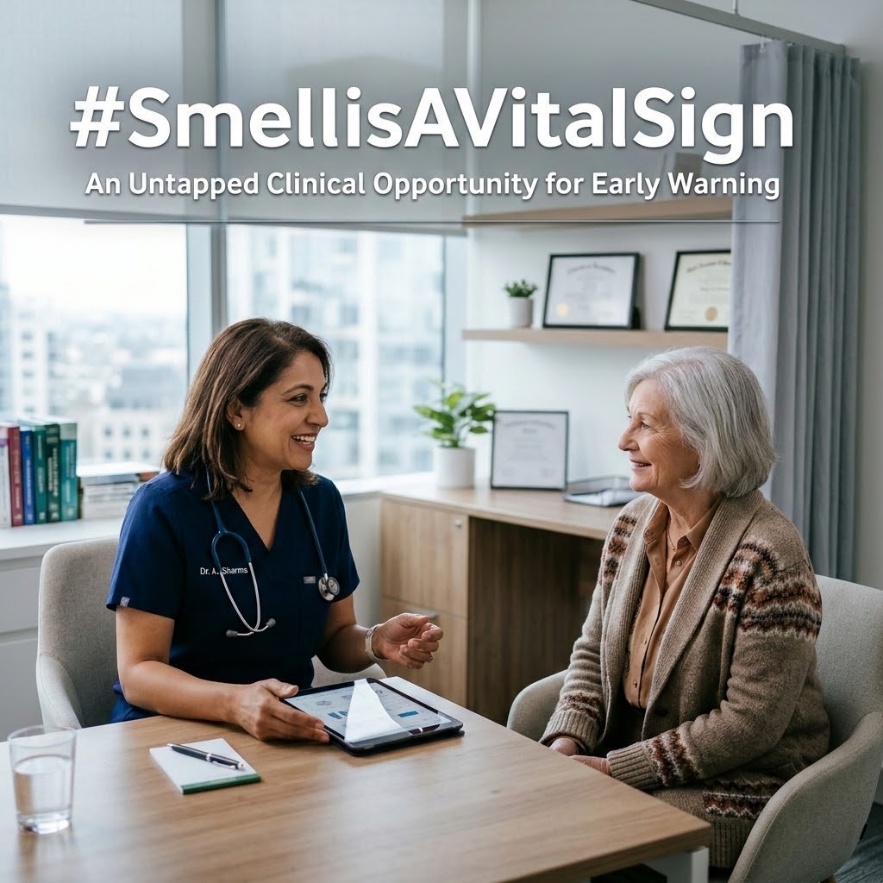
Smell is a Vital Sign: Bringing Smell Assessment into Routine Care
Research • Clinical Practice • Public Health • Policy
Keep Me in the Loop / I Have a QuestionA Call to Clinicians: Cranial Nerve I in Primary Care
While blood pressure, lipid panels, vision, and hearing are universally measured during routine exams, olfactory function (Cranial Nerve I) remains conspicuously absent from standard clinical evaluations.
The sense of smell is a sensitive, real-time indicator of neurological and metabolic status:
- Direct Neural Access: Olfactory sensory pathways bypass the thalamus, projecting directly to limbic structures critical for memory, emotion, and autonomic regulation.
- Continuous Neurogenesis: Olfactory sensory neurons are unique among the body's neural pathways because they undergo continuous neurogenesis, turning over and regenerating approximately every 30 to 60 days
- Pathophysiological Indicator: Olfactory dysfunction serves as an early clinical biomarker across multiple diverse conditions including Alzheimer’s disease, Parkinson’s disease, depression, and frailty.
Elevating olfaction to a vital sign bridges a critical gap in preventative and primary care.
An Untapped Clinical Opportunity for Early Warning
The sense of smell is a validated, high-value biomarker for early clinical risk stratification:
- Neurodegenerative Screening: Olfactory decline can precede the motor and cognitive symptoms of neurodegenerative conditions, including Parkinson’s and Alzheimer’s diseases, by 4 to 10 years.
- Risk Stratification for Frailty: Both self-reported olfactory dysfunction and measured olfactory identification are independently associated with frailty, as well as poor post-surgical outcomes.
- Environmental Health: Cumulative exposure to ambient air pollution and industrial toxins damages olfactory pathways over time. Disproportionate environmental burdens mean vulnerable populations face heightened sensory and neurological risks.
Overcoming the Clinical Gap
Despite robust evidence, smell and taste assessment is largely unstandardized in clinical workflows. A recent study found that 45% of patients with smell or taste disorders never consult a healthcare provider, and those who do frequently encounter diagnostic inertia.
Actionable Clinical Integration:
Rapid, validated screening instruments allow clinicians to evaluate olfactory function chairside in under five minutes.
Routine encounters can be augmented by three validated screening questions:
- 1
Have you experienced a noticeable decline or change in your sense of smell or taste over the past year?
- 2
Is flavor perception or food enjoyment significantly altered? (Up to 80% of what is perceive as taste is driven by olfaction.)
- 3
Have familiar ambient odors (e.g., cooking aromatics, hazards) become difficult to detect?
Professional Leadership & Institutional Pathways
Transforming population-level sensory health requires coordinated action across nursing, clinical medicine, public health administration, and legislative bodies:
Nursing Leadership: The National League for Nursing (NLN) has issued strategic guidance calling for the integration of chemosensory assessment into nursing education and advanced practice.
Legislative & Public Health Action: Policymakers and public health agencies must support research funding and incorporate sensory screening guidelines into primary care quality metrics.
Take Action: Bring Smell Testing to Routine Care
We invite researchers, clinicians, public health officials, and policymakers to collaborate in establishing olfactory assessment as a standard pillar of preventative health.
- For Clinicians & Practice Leaders: Implement rapid screening protocols in primary care workflows.
- For Researchers & Educators: Expand clinical trials on early neurodegenerative biomarkers and integrate olfactory health into medical and nursing curricula.
- For Legislators & Public Health Officials: Champion policies supporting proactive diagnostic innovation that considers access for all patients.
Join the Movement to Make Smell a Vital Sign
Amplify the Cause: be a part of building national momentum by adding the hashtag #SmellisAVitalSign across professional platforms
Questions?We are here to help.
Use the form below to get in touch.
We will use the email address you provide to send occasional updates about our efforts to make the sense of smell a vital sign. We will never sell your information and you may unsubscribe at any time by indicating so in the “I Have a Question” form.